
Moorhead’s AI efforts receive national recognition
Minnesota State Moorhead is doing AI differently, said Dr. Josh Riedy, executive director of the university’s Institute of Applied Artificial Intelligence. The creation of the institute and Riedy’s position are examples of how Moorhead is setting the pace and standing out in higher education, he said.
“We are mindfully applying AI at scale, not merely discussing the topic. It’s something MSUM is actively doing, and that sets us apart from other universities in the United States,” Riedy said.
An openness to learning and risk tolerance is establishing Moorhead as the first regional public institution to fully embrace AI, Riedy said. “We are going to be known as a beacon campus.”
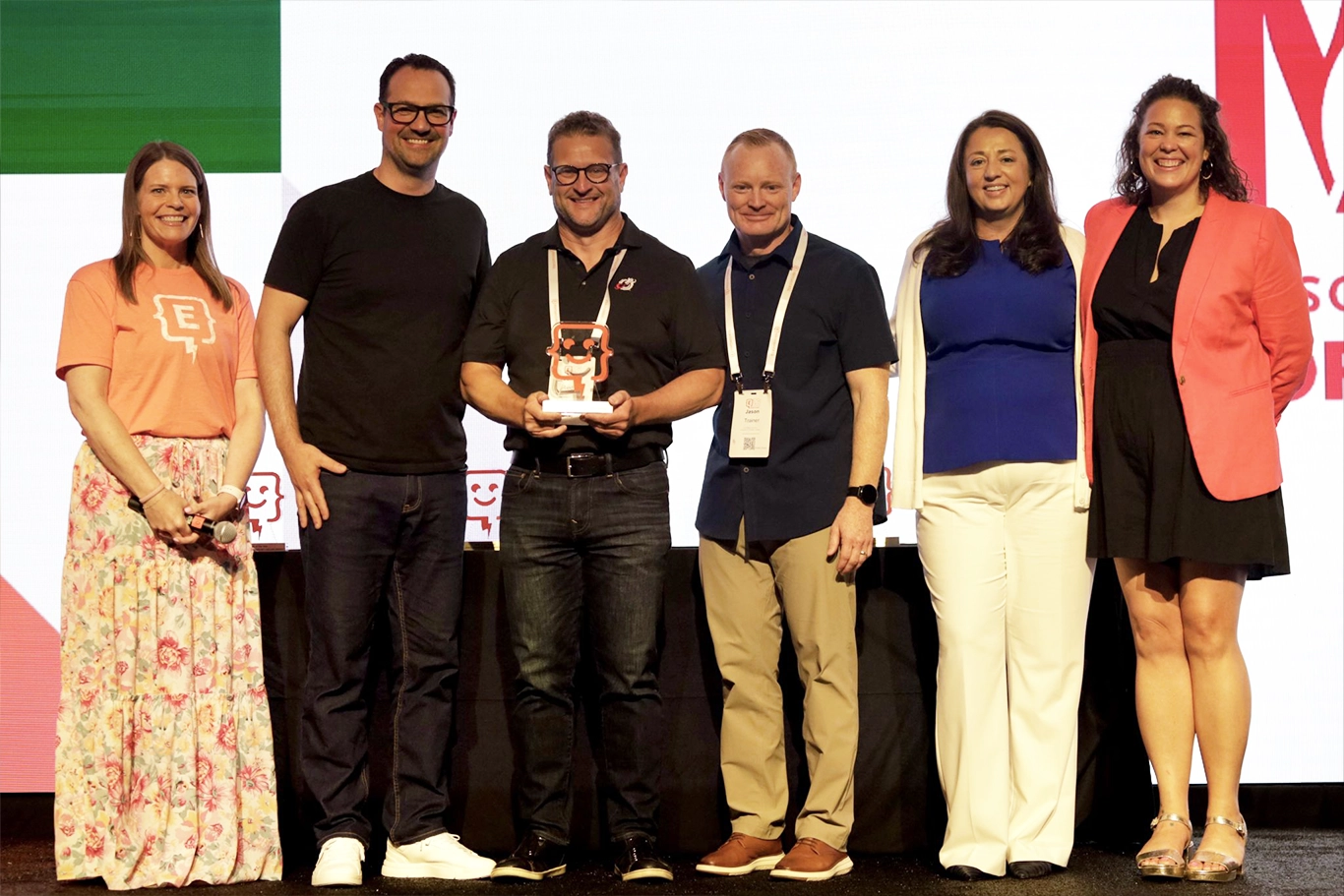
That momentum was recognized this summer, when Minnesota State Moorhead received the first-ever AI Innovation Award during the Engage Summit 2026 in Charlotte, N.C. Hosted by Element451, Engage is a premier higher education conference, bringing together over a thousand campus leaders to explore leveraging autonomous AI agents. At the conference, Riedy spoke during a keynote panel as well as during a gathering of university presidents.
The award recognized MSUM for its willingness to lean into the future of technology and explore bold use cases right now, rather than waiting for tomorrow.
Riedy was also selected as a featured speaker for the Aug. 13 Midwest Technology Summit, hosted by the Fargo Moorhead West Fargo Chamber.
Establishing the Framework
A key step for MSUM is the academic adoption of artificial intelligence.
To guide this, the university has built its own AI literacy framework developed from the Dimensions of AI Literacies taxonomy, a set of eight human-first skillsets and mindsets co-created by Dr. Angela Gunder, who gave a keynote address on campus this spring.
“Moorhead's approach reflects what our global research makes clear: there is no one path to impact for AI in education," Gunder said. “By remixing the Dimensions of AI Literacies taxonomy into a framework grounded in their own mission and values, MSUM is doing the proactive, human-first work of making AI adoption meaningful and sustainable as opposed to a reactive pivot.”
Riedy said the academic adoption of AI will happen at the program and course level, at scale. “We don’t believe that AI literacy is uniform across the university,” he said. “There is a unique fingerprint for each academic program.”
AI faculty fellows facilitated conversations with over 30 academic departments on the topic, and each department now has an AI lead. The framework will be embedded in the university’s learning management system to help track AI-related learning outcomes.
The goal is to give students hands-on experiences with AI in and out of the classroom, so they are walking into workplaces ready to thrive and help their organization thrive.
One way that Riedy sees this happening is by partnering with external organizations through applied AI clinics. With support of faculty who vet each project, student teams would test tools, analyze performance, identify risks and recommend solutions. Clinics could start as early as spring 2027.
Put "AI literacy isn't uniform" and "unique fingerprint" in red.
The other key piece is the alignment of academic, student, and technology services. It’s crucial that MSUM has the tools and infrastructure to support all Dragons as they navigate an AI-enabled university, Riedy said. The implementation of a cloud-based enterprise resource planning system across the Minnesota State system provides a rare opportunity to incorporate AI into reimagined campus workflows and processes, he said.
“We are doing the gritty work that others are not, and that’s what’s going to put MSUM well ahead of its peers,” Riedy said.
More examples of Moorhead putting AI into action include:
In October 2025, the university hosted a three-day AI Summit for business leaders, educators and high school students.
Four teams of Dragons participated in the March 2026 AI Ignite: Student Showcase at MSUM, presenting concepts, projects, and perceptions related to artificial intelligence.
The institute hosted in-depth training sessions in August for educators, including one specifically for Moorhead Area Public Schools staff and administrators.
The university has received approval from the Higher Learning Commission to offer a Master of Science in Artificial Intelligence. The graduate degree program will launch in fall 2027.
The University of Minnesota and Minnesota State Moorhead, on behalf of the Minnesota State system, are submitting a proposal to the National Science Foundation to fund the establishment of a collaborative statewide AI-readiness coordination hub.
Moorhead will host invited university leaders from across the U.S. for a convening on AI in April 2027.
“We have what’s called a first mover advantage in the business world,” Riedy said. “We are out front with transparency that we intend to share with the world.”
Institute of Applied AI
Through cross-sector partnerships, applied learning, and statewide AI literacy initiatives, the Institute equips students, educators, and employers with the knowledge to use AI thoughtfully and the hands-on practice to put it to work.
Learn more about the Institute of Applied AIMore Stories from Dragons

Investing in Dragons
Finance students manage the Dragon Investment Fund, a real investment portfolio started by alum Mike Benson.
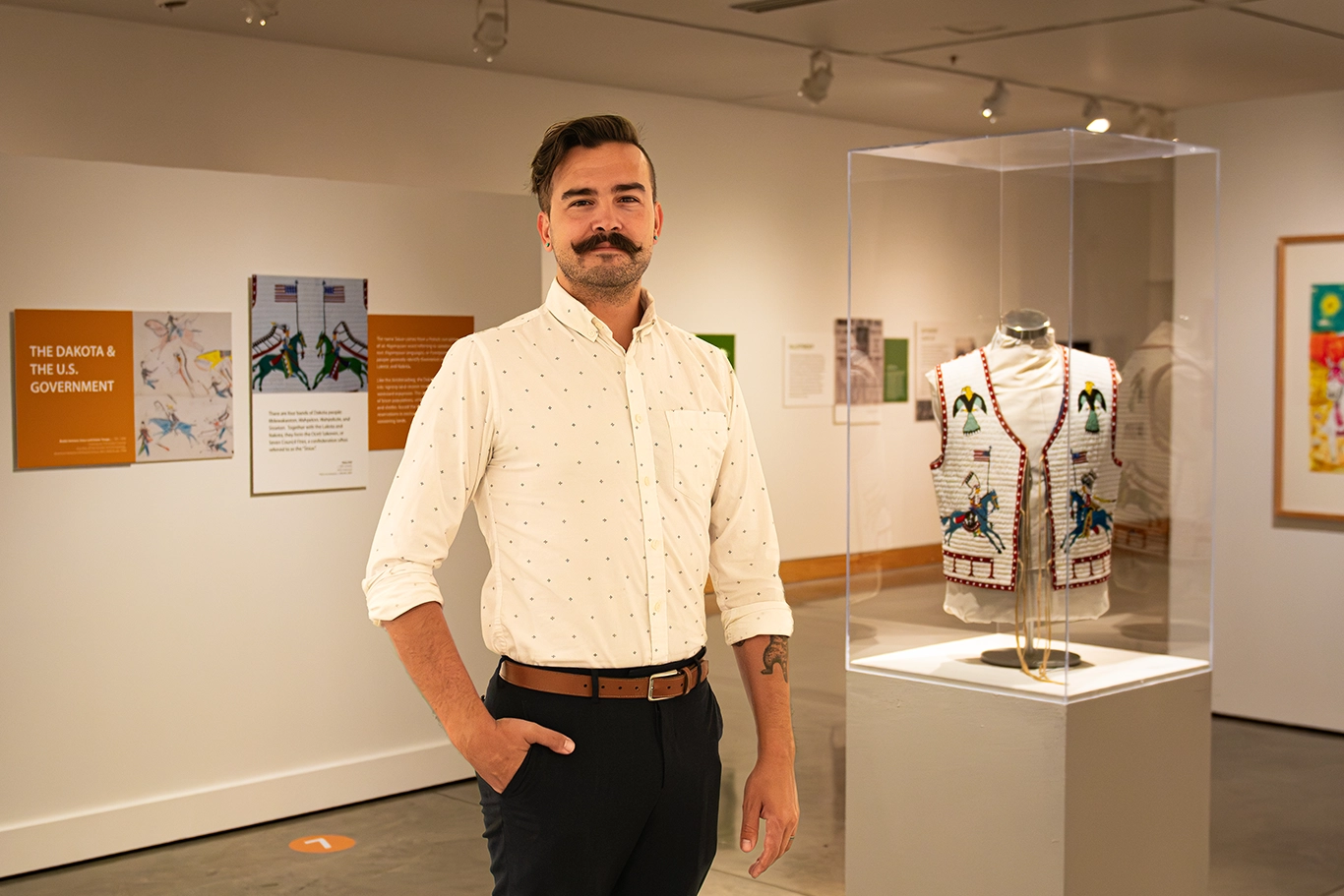
Anthropology alum spotlights Indigenous pieces through curator role at Plains Art Museum
Bret Salter '17 curates Indigenous art at the Plains Art Museum.

Fargo, West Fargo Scholars initiative rewards local academic talent
Through a groundbreaking partnership with the Fargo and West Fargo public school districts, Minnesota State Moorhead launched a new scholarship program this year to reward the academic excellence found right across the Red River.